
Local Citations for Small Business: The 30 Directories That Matter
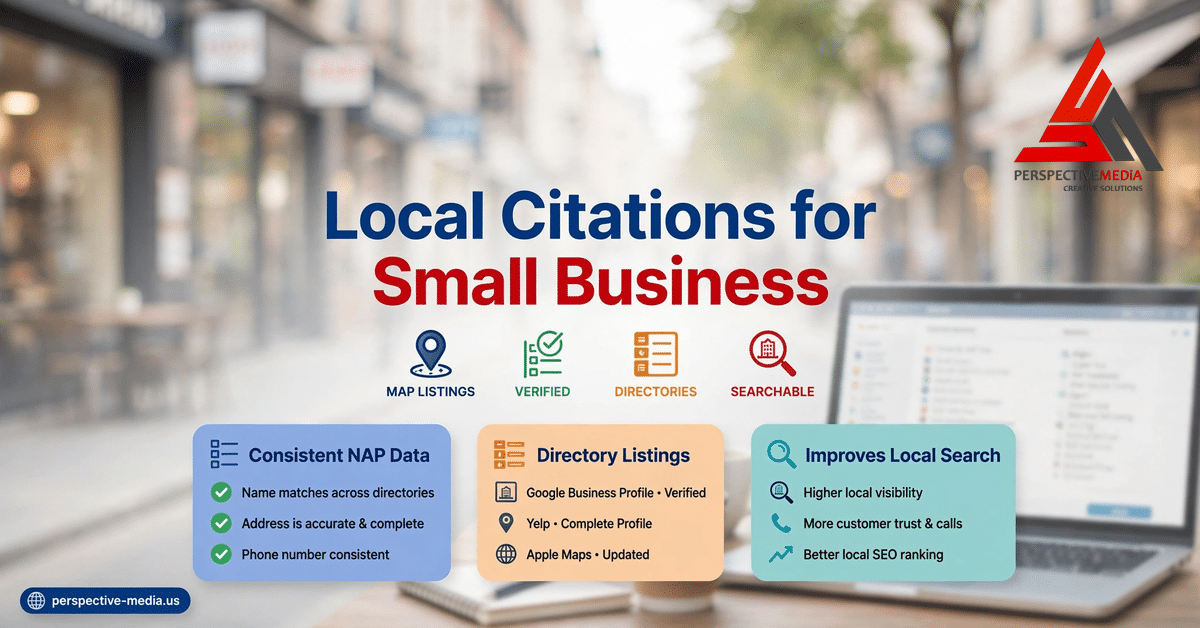
Ask a room of small business owners where their business is listed online and you’ll get two answers: “Google” and “no idea.” The “no idea” part is the problem. Your business’s name, address, and phone number — your NAP — lives on dozens of US directories, data aggregators, and review sites. When those listings are missing or wrong, Google trusts your business details less, and map-pack visibility quietly erodes.
Local citations for small business aren’t glamorous, but they’re one of the most cost-effective local SEO investments there is: no ad spend, no new content, just accuracy. This guide lists the 30 directories that actually matter for US businesses in 2026, in priority order, plus how to audit and clean up your listings without burning a week on it.
What Local Citations for Small Business Actually Are
A citation is any online mention of your business’s name, address, and phone number. It doesn’t need a link to count — a plain-text mention on a directory page is a citation. Citations matter because they’re how Google cross-checks your business details. Google’s own documentation on how local results are ranked names prominence as one of the three ranking factors, and consistent citations across the web are one of the strongest prominence signals a local business can build.
There are two kinds. Structured citations are directory listings: Yelp, Bing Places, Apple Business Connect, industry directories. Unstructured citations are mentions on blogs, news sites, and social platforms. Structured citations are the ones you control, so they’re where the work goes. Fix them once and they keep paying.
The 30 Local Citations for Small Business Worth Building
Not all directories are equal. The directories below are ordered by real-world impact for US local businesses in 2026 — the first ten are non-negotiable, the rest depend on your industry and market.
Tier 1: The big platforms (do these first)
- Google Business Profile — the citation all others orbit. If this isn’t perfect, nothing downstream matters.
- Apple Business Connect — feeds Apple Maps, Siri, and CarPlay. Massive blind spot for businesses that only think Google.
- Bing Places — feeds Bing, DuckDuckGo, and parts of the Microsoft ecosystem.
- Facebook — still a major citation source and review surface for local businesses.
- Yelp — high-trust citation plus the review platform Google watches most closely in many industries.
- Better Business Bureau (BBB) — a trust-heavy citation that also shows up in branded searches.
- YellowPages.com / YP — still feeds a surprising number of downstream directories through its data partnerships.
- MapQuest — declining as a consumer brand, still syndicated widely as a data source.
- Foursquare — the data backbone behind countless apps and in-car systems.
- Data Axle (formerly Infogroup) — a primary data aggregator. Correcting your record here fixes dozens of downstream listings at once.
Tier 2: Search, social, and review surfaces
- Nextdoor — neighborhood-level visibility where US homeowners actually ask for contractor recommendations.
- Angi (formerly Angie’s List) — still influential for home services despite the rebrand churn.
- HomeAdvisor — same family as Angi; matters for trades even if you never buy their leads.
- Thumbtack — a citation and a lead channel for service businesses.
- Houzz — essential for remodelers, builders, and design-adjacent trades.
- Chamber of Commerce (local) — a geographically authoritative citation with real trust signals.
- LinkedIn Company Page — a citation most B2B service businesses forget they need.
- Instagram business profile — address and phone fields count as structured data.
- TikTok business profile — growing local-discovery surface; the listing fields are a citation.
- Trustpilot — a review citation with strong branded-search visibility.
Tier 3: General directories and data sources
- Neustar Localeze — another primary aggregator; correct it and downstream listings follow.
- Manta — a long-standing small-business directory with solid domain authority.
- Hotfrog — widely syndicated business data source.
- Brownbook — UK-origin but indexed well in the US too.
- Citysearch — legacy directory, still crawled and cited.
- MerchantCircle — small-business network with local pages that rank.
- Superpages — legacy Yellow Pages brand, still feeds data downstream.
- Local.com — regional directory with decent local-page authority.
- eLocal — service-business directory with strong category pages.
- Your industry directories — the national trade associations, licensing boards, and niche directories for your trade (NARI for remodelers, ACCA for HVAC, state bar associations for attorneys). One industry citation often outweighs five general ones.
What about the other 200 directories?
They exist, and most are worthless. Citation-building services love to quote big numbers — “we’ll list you on 300 directories!” — but directories nobody visits and nobody crawls add nothing. The thirty above cover the platforms, the aggregators that feed everything else, and your industry’s own directories. That’s the set that moves rankings.
How to Audit and Clean Up Your Citations Fast
You don’t need to visit thirty sites manually. Here’s the efficient process:
Step 1: Fix your canonical NAP first
Write down the single correct version of your name, address, and phone number — exactly as it appears on your signage and your Google Business Profile. Google’s business representation guidelines are strict about using your real-world name, and every listing you touch gets corrected to this exact version. Skip this step and you’ll “fix” listings into three different variants.
Step 2: Hit the aggregators before the directories
Data Axle and Neustar Localeze sell business data to hundreds of downstream directories. One correction at the aggregator level propagates; fifty corrections at the directory level don’t. Start there, then do Apple Business Connect, Bing Places, and Yelp — the platforms with real user traffic.
Step 3: Claim, correct, or remove
For each directory: claim the listing if it’s unclaimed, correct the NAP if it’s wrong, and request removal or merger for duplicates. Duplicates are the silent killer — two Yelp listings for one business split reviews and confuse Google. Most directories have a “report duplicate” flow; use it.
Step 4: Suppress the junk
You’ll find listings on directories you’ve never heard of with wrong data. For aggregators and major platforms, correct them. For bottom-tier directories with no traffic, suppress or remove rather than maintain — but never leave wrong phone numbers live. A wrong number on any indexed page can end up in an AI answer about your business.
Step 5: Recheck quarterly
Citations drift. Aggregators refresh from web crawls, customers suggest edits, and directories merge. A quarterly spot-check of the Tier 1 list takes twenty minutes and catches drift before it costs you rankings.
Citation Mistakes That Cost US Businesses Rankings
- Tracking numbers on directory listings. Call-tracking numbers belong in ads, not citations. A different phone number on Yelp than on your website is NAP inconsistency by definition.
- Keyword-stuffed business names. “Dallas Emergency Plumber 24/7” as a directory business name violates Google’s guidelines and gets listings suspended. Use your real name everywhere.
- Ignoring Apple Business Connect. Half of US local search on mobile happens in Apple Maps. A missing or wrong Apple listing is invisible revenue loss.
- Suite-number roulette. “Suite 4” here, “Ste. 4” there, nothing on Facebook. Pick one format, use it everywhere.
- Set-and-forget. Citations built once and never checked decay within a year. The businesses outranking you are the ones doing the quarterly check.
What to Do This Week
Block two hours. Define your canonical NAP, correct your Data Axle and Localeze records, then work the Tier 1 list top to bottom. Most single-location businesses finish Tier 1 in one sitting. Tier 2 takes another afternoon. Tier 3 and industry directories fill in over the following month. If you operate in multiple cities, pair clean citations with city service pages that rank — the two compound — and keep your “near me” rankings compounding with the profile work that supports them.
If you’d rather not spend those hours, that’s exactly what our SEO services cover — but either way, don’t leave the work undone. Every month your citations disagree, you’re paying a quiet tax on every “near me” search in your market.
Perspective Media helps US service businesses win local search: Google Business Profile optimization, citation cleanup, review generation, and the location content that feeds the map pack. If your competitors outrank you and you don’t know why, start with a conversation.