
Zero-Click Searches: How US Businesses Still Win Without the Click
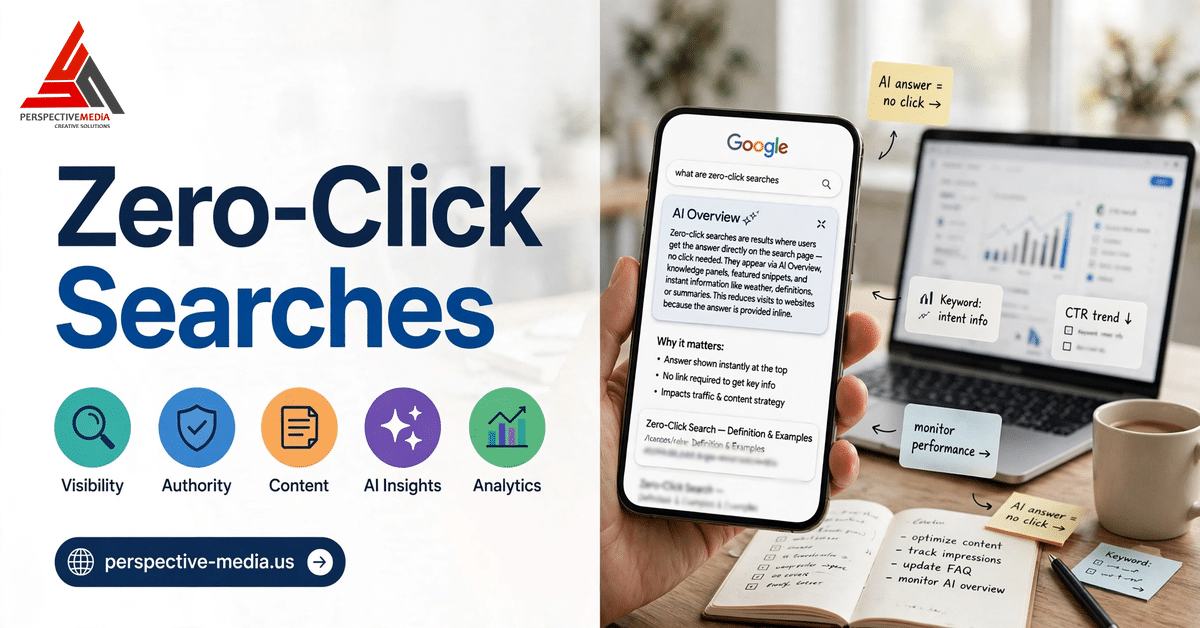
Here is the number every US business owner should know before judging their SEO this year: a zero-click search strategy is no longer optional, because between January and April 2026, 68.01% of US Google searches ended without a click to any website at all, according to SparkToro’s analysis of Similarweb clickstream data, reported by Similarweb. That is up from about 60% in 2024 and roughly 45% a decade ago. The click was never the whole game, but it used to be most of it. Now, for most searches, it is not even on the board.
This does not mean SEO is dead. It means the definition of winning has changed. This guide explains what zero-click searches are, why they accelerated, and the practical zero-click searches strategy US businesses can use to still win customers — even when Google answers the question itself.
What Zero-Click Searches Actually Are
A zero-click search is a search that ends without the user clicking through to any external website. The searcher types a question, reads the answer on the results page — an AI Overview, a featured snippet, a knowledge panel, a map pack, a direct answer — and stops, searches again, or picks up the phone instead.
Three things are worth getting straight before you panic about the 68% figure.
First, it counts all searches, including navigational ones (“Facebook login”), weather checks and quick facts that were never going to become your customer. Your commercially valuable searches — “emergency plumber near me”, “marketing automation agency”, “roof replacement cost” — still produce clicks at far higher rates, because the searcher needs a provider, not an answer.
Second, the figure is a blended average. Mobile searches still produce an external click about 45% of the time; desktop is far more clickless, with only about 20% producing an external click. If your buyers research on desktop — and most B2B buyers do — your real zero-click exposure is closer to 80%. Plan for that, not the headline.
Third, “no click” does not mean “no value”. A searcher who sees your business name, rating and phone number in a map pack and then calls you directly has not clicked — but has absolutely converted. The businesses losing in this environment are the ones still measuring success only in website sessions.
Why Zero-Click Searches Accelerated
Zero-click behaviour predates AI search by years — featured snippets, knowledge panels and local packs were already answering questions on the results page in 2019. AI Overviews accelerated it sharply: Pew Research found users clicked through on just 8% of searches when an AI Overview was present, versus 15% without one. Google’s own SEO Starter Guide still frames SEO as helping users find and choose your site — but the results page now does much of that choosing before anyone arrives.
For US businesses, the practical consequence is a split funnel. Informational traffic — the blog posts, guides and explainers that used to bring in steady sessions — now largely resolves on Google. Commercial and local traffic still clicks, but it clicks on fewer, more trusted options: the map pack, the top few results, the brands it already recognises. The strategy below is built for that split.
A Zero-Click Search Strategy in Five Moves
1. Win the surfaces that answer without a click
If Google is going to answer the question on its own page, make sure the answer carries your name. That means:
- Your Google Business Profile, fully built out. For local searches, the map pack is the new homepage. Complete categories, services, photos, hours, and a steady flow of genuine reviews. Our guide to ranking in “near me” searches covers the mechanics.
- Direct, citable answers on your own pages. Short, factual paragraphs that answer one question cleanly are what AI Overviews quote. Structure content so the answer comes first, the explanation second. Our answer engine optimisation guide explains how to optimise for the single direct answer across assistants and AI search.
- Schema markup that machines can read. LocalBusiness, FAQ and Service schema help Google present your business correctly in panels and overviews. Unmarked content is invisible to the surfaces that matter most.
2. Shift content from traffic-chasing to demand-building
Stop judging blog posts by sessions alone. In a zero-click world, a post that gets quoted in an AI Overview, earns a branded search a week later, or gets screenshotted into a buying conversation has done its job — even if Analytics shows a modest session count.
Practically, that means prioritising three content types: comparison and buyer’s-guide content for people ready to choose, local and service content tied to real places you serve, and genuinely useful expertise content that builds the brand people search for by name. Branded search is the traffic AI cannot intercept — nobody else can rank for your name.
3. Measure what zero-click hides
If you only watch sessions, a zero-click strategy looks like failure. Build a dashboard that captures the conversions Google never sends you:
- Calls and direction requests from your Business Profile, tracked separately from website traffic.
- Branded search volume in Search Console — rising brand queries are the footprint of visibility that never clicked.
- AI visibility monitoring — whether your brand appears in AI Overviews and chatbot answers for your money terms. Our guide on tracking visibility in ChatGPT and AI Overviews sets out practical monitoring methods now that classic rank tracking breaks down.
- Direct and referral traffic trends, which often absorb the demand that search visibility creates without a click.
Report these together, monthly, alongside sessions. The story they tell is usually far healthier than sessions alone.
4. Convert the clicks you do get much harder
Fewer clicks means each one is worth more — and your site has to earn it. Audit the journey from the searches that still convert: does the landing page answer the query in the first screen, show a phone number a mobile user can tap, and offer a next step that does not require reading 1,500 words? Speed matters here too; a visitor who waited through an AI answer will not wait through a slow page.
This is also where paid search earns its place in a zero-click strategy. When organic clicks thin out on commercial terms, a well-targeted ad above the AI Overview is often the only route to the click at all. Treat paid and organic as one acquisition system, not rival budgets.
5. Build demand outside Google’s walls
The most durable hedge against zero-click search is demand that does not start with a search. Email lists, review-driven referrals, social audiences and repeat customers all bypass the results page entirely. Every customer you win should leave with a reason to return directly: a review request, a follow-up sequence, a useful email. That is not a separate marketing plan — it is the retention half of your zero-click searches strategy.
What Not to Do
- Do not chase informational traffic you cannot convert. Ranking for “what is X” feels good and pays nothing when Google answers it itself. Tie every content investment to a commercial or brand outcome.
- Do not abandon SEO. The businesses disappearing from AI answers and map packs are the ones that stopped maintaining profiles, content and reviews. Zero-click rewards presence; it punishes absence.
- Do not judge your agency on sessions alone. If your report shows sessions down but calls, branded searches and bookings up, the strategy is working. Demand the fuller dashboard in move 3 before concluding otherwise.
- Do not copy AI answers into your content. Search engines and AI systems reward original, experience-based content. Regurgitated summaries are exactly what the Overview already provides — and nobody needs a second copy.
Frequently Asked Questions
Does zero-click search mean SEO is dead?
No. It means SEO’s job has expanded from earning clicks to earning visibility, citations and direct actions — calls, map views, branded searches — on surfaces that never send a visit. The businesses that treat that as the job are still growing.
Which searches still produce clicks?
Commercial and local searches with a provider decision attached: “near me” services, quotes, bookings, product purchases. Informational questions are the most clickless; high-intent searches remain the most valuable traffic you can earn.
How do I know if AI Overviews are costing me traffic?
Compare Search Console impressions against clicks for your top informational pages. If impressions hold or grow while clicks fall, and your pages still rank, AI answers are likely intercepting the visit. Track that gap monthly rather than reacting to a single dip.
Should small businesses invest less in blogging now?
Invest differently, not necessarily less. Fewer broad informational posts; more buyer’s guides, local pages, comparison content and expertise-led pieces that build brand demand and earn citations. Every post should have a job beyond ranking.
Winning Without the Click
Zero-click searches are not a temporary disruption to wait out. They are the structure of search in 2026: most questions answered on the page, most commercial decisions still made by humans who need a provider they trust. The businesses winning in that world are visible where answers happen, unmistakable in their local market, and measured on calls and bookings — not just sessions.
Build for the searcher who never clicks, and the ones who do will find a business that already looks like the obvious choice.